A teen who suddenly refuses school, snaps over a small change, or spends hours shut away in their room may not be being difficult. They may be carrying more anxiety than they can explain. Anxiety support for autistic teens starts with seeing the behaviour as communication, then creating safety, choice and practical ways forward.
For many families, the hardest part is that anxiety does not always look like worry. It can look like anger, avoidance, tiredness, perfectionism, constant questions, physical pain or a complete shutdown. When a young person has spent all day coping with noise, social rules, unexpected changes and the pressure to fit in, there may be very little left in the tank by the time they get home.
Why anxiety can feel bigger for autistic teenagers
Teenage years bring a rush of new expectations: changing classrooms, heavier homework loads, friendships that become more complicated, body changes, public transport, casual work and questions about the future. These experiences can be demanding for any young person. For an autistic teen, they can also involve uncertainty, sensory overload and the exhausting work of trying to work out what others expect.
Anxiety is not an inevitable part of being autistic, and autism is not something to fix. But autistic people can face circumstances that make anxiety more likely or harder to manage. A teen may have been misunderstood at school, bullied, excluded, criticised for their communication style, or pushed to cope without the adjustments they need. Repeated experiences of feeling unsafe or “wrong” can make everyday situations feel risky.
This is why reassurance alone often falls short. Saying “you’ll be fine” may be well meant, but it does not reduce the noise in the classroom, explain a confusing social situation or make a last-minute timetable change predictable. Support works best when it respects the teen’s experience and changes the conditions causing the distress where possible.
Notice the signs before anxiety reaches crisis point
Each teen will show anxiety differently. Some become quiet and agreeable at school, then fall apart at home. Others become argumentative, restless or controlling because they are trying to regain a sense of certainty. A young person may not have the words for “I am anxious”, particularly when they are already overwhelmed.
Look for patterns rather than one isolated moment. Are hard mornings linked to a particular subject, bus trip or peer group? Does distress rise after a noisy assembly, an unstructured lunchtime, a poor night’s sleep or several busy days in a row? Is your teen avoiding showers, meals, messages or activities they once enjoyed?
Physical signs matter too. Stomach aches, headaches, nausea, racing thoughts, trouble sleeping, skin picking and a need to pace can all be part of anxiety. Keeping a simple record of what happened before, during and after difficult moments can reveal useful clues. The goal is not to monitor your teen closely. It is to understand what their nervous system may be responding to.
Ask questions that make room for honesty
Direct questions such as “What’s wrong?” can be too broad when someone is overloaded. Try offering specific, low-pressure choices instead: “Was today more noisy, more confusing or more tiring than usual?” or “Would you rather talk, text it to me, or have some quiet first?”
Some teens communicate more easily while walking, driving, gaming, drawing or doing a familiar task side by side. Others need time before they can revisit an upsetting event. Let them know they do not need to explain everything perfectly to be believed.
Anxiety support for autistic teens begins with practical safety
A calm home environment will not remove every worry, but it can give a teen somewhere to recover. Start by reducing demands during high-stress periods. After school, that might mean food, quiet, a preferred activity and no immediate questions about the day. For another teen, it may mean a predictable chat at the kitchen bench. Support is individual, so ask what helps rather than assuming.
Predictability is often protective. Use a visible calendar, shared notes on a mobile, checklists or a weekly plan to make upcoming events clearer. Include the things your teen looks forward to as well as appointments, homework and obligations. When plans need to change, give notice where you can and explain what will stay the same.
Sensory needs also deserve a place in the plan. Headphones, a quieter route to school, a seat near an exit, comfortable clothing, sunglasses, access to water or a low-sensory break space can reduce the load before anxiety takes over. These are not indulgences. They can be practical tools that help a young person participate.
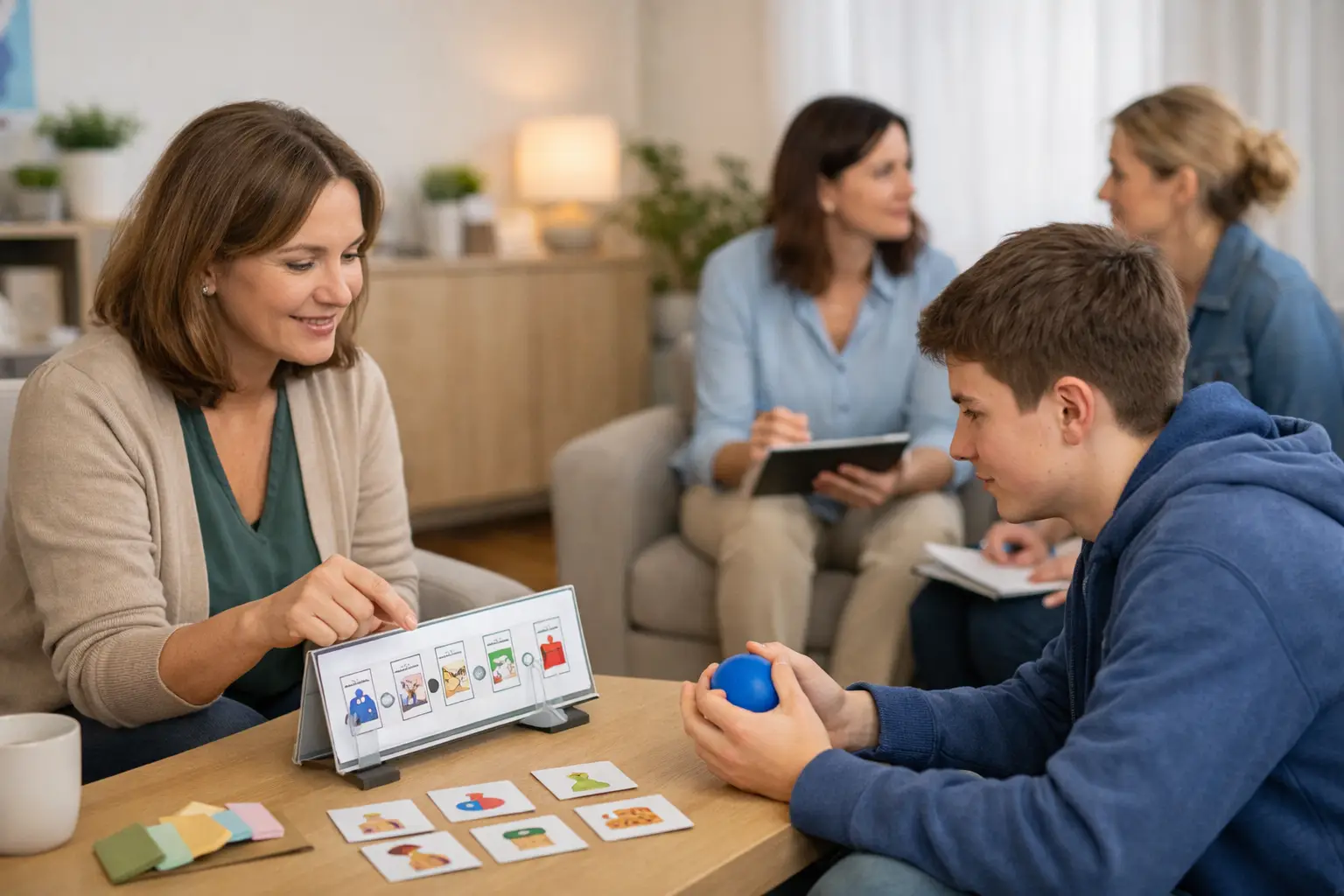
It is also useful to create a shared plan for overwhelm. Keep it short and realistic. Your teen might use a code word, text a trusted adult, step outside, visit a designated wellbeing space, listen to music or have five minutes without conversation. The plan should be agreed before a crisis, not introduced while everyone is distressed.
Work with school, not against your teen
School avoidance is often treated as a motivation problem. For an anxious autistic teen, it may be a sign that the environment has become too hard to manage. Pushing harder without understanding why can increase fear and damage trust.
A conversation with the school can focus on barriers and adjustments rather than labels alone. Helpful supports may include a predictable arrival routine, a trusted staff member, advance notice of changes, permission to take sensory breaks, clear written instructions, a quiet place at lunch, flexible presentation options or a gradual return plan after time away.
The right support depends on the student. A break card may feel empowering for one teen and embarrassing for another. Some want staff to check in; others prefer to approach someone themselves. Involve your young person in decisions wherever possible. Choice and control build confidence, especially when so much of school life is decided by others.
If school attendance has become difficult, aim for a plan that is compassionate and achievable. A full day may be too much at first. Small, supported steps can be more sustainable than repeated attempts that end in panic or exhaustion. Progress is not always linear, and a difficult week does not mean the plan has failed.
Build skills without asking your teen to mask
Coping skills should make life more manageable, not teach a teen to hide distress until they burn out. Some young people find breathing exercises helpful; others find concentrating on their breath uncomfortable or even more stressful. Offer options and be curious about what genuinely works.
Useful tools can include rating anxiety from one to ten, writing worries down, rehearsing a conversation, using a script for a difficult situation, listening to a familiar playlist, moving their body, spending time with a pet, or breaking a task into very small steps. For a teen who fears getting things wrong, “good enough” goals can be kinder and more useful than perfection.
It can also help to separate the problem from the person. Instead of “You are overreacting”, try “This situation is asking a lot of you. Let’s work out which part feels hardest.” This language protects dignity and makes problem-solving possible.
Friends, siblings and extended family can play a part as well. They do not need to become experts or therapists. They can respect boundaries, avoid teasing about anxiety, offer clear invitations rather than pressure, and understand that cancelling plans may be about capacity rather than lack of care.
Know when to seek extra support
Families should not have to carry serious anxiety alone. Consider speaking with your GP or another qualified mental health professional if anxiety is persistent, getting worse, stopping your teen from attending school or doing everyday activities, affecting sleep or eating, or leading to frequent shutdowns, meltdowns or isolation.
When looking for support, ask whether the professional understands autism and will adapt their approach. A good fit matters. Your teen may need clearer language, extra processing time, sensory consideration, visual tools, online appointments or a parent or support person present. Therapy should not be about making an autistic person appear less autistic. It should help them feel safer, understood and more able to live the life they want.
If your teen talks about self-harm, suicide or not wanting to be here, treat this seriously. Stay with them where possible, remove immediate dangers, and seek urgent help through emergency services, a hospital emergency department, or an appropriate crisis service. You do not need to have the perfect words before asking for help.
 Supporting an anxious autistic teenager can be tiring and emotional,
particularly when you are also trying to hold family life together. You
are allowed to seek support for yourself too. The steadier and better
informed the adults around a teen can be, the more likely that young
person is to feel safe enough to take the next small step.
Supporting an anxious autistic teenager can be tiring and emotional,
particularly when you are also trying to hold family life together. You
are allowed to seek support for yourself too. The steadier and better
informed the adults around a teen can be, the more likely that young
person is to feel safe enough to take the next small step.
Your teen does not need to become fearless to build a meaningful life. They need people who listen, environments that make room for their needs, and repeated proof that anxiety can be met with understanding rather than shame.


No comments:
Post a Comment